
Industry
German Service Culture — What Made in Germany Still Has to Learn About Service
We build the best machines in the world — and deliver them on time. When it comes to service at the highest level, we lag behind. A stocktaking from twenty years of international service experience.

Article text
I was born in Worms, trained as a chef, and have worked in more than fifty countries. That gives me an — admittedly subjective — view of something that is endlessly discussed in Germany but rarely named honestly: our service culture.
We have strengths. And we have shortcomings. Both are structural — and both can be changed.
What we are good at
Punctuality. Reliability. Cleanliness. German hotels deliver hardware at a level that sets international benchmarks. Anyone who enters a German four-star house knows what they will get — and they get it exactly so.
That is a lot. And it is not a given. In many of the countries where I have worked, it is not the norm.
What we are not so good at
Service as a posture rather than a procedure. The difference between “I am working right now” and “I am here for you right now.” That is not German-language coded — it appears far more precisely in the English service vocabulary than in ours.
A few concrete observations:
-
The greeting. In the British five-star house, service begins with a glance and a slight nod before the guest has fully crossed the threshold. With us, often only once they are standing at reception.
-
Thinking ahead. When a guest in St. Moritz asks for an address, they get directions, a call ahead, a reservation. In many German houses: just the directions.
-
Silence. In service at the highest level, silence is a tool. The German tradition loves to inform.
Why it isn’t about money
A widespread assumption: it is a question of staffing levels. More money per employee, more service quality.
True in part. But not entirely. I have seen houses that deliver more service quality with less staff than German four-star houses with more positions. It is rather the question: what is the staff’s posture toward their own work? And how is it systemically reinforced?
Mallorca as a case study
I have lived on Mallorca for years. The island has developed a paradoxical service culture: German clientele, often with high expectations, in a Mediterranean service environment. What works is the mixture — the structures of one culture, the warmth of the other.
Anyone who understands Mallorca as a hospitality location sees early what Germany also has to do: less schema, more substance. Less service standard, more service reflex.
What has to change in ten years
Three theses, with no claim to completeness:
- Hospitality training has to introduce posture as a core subject — not as an optional module.
- Top houses have to grasp staff as a strategic investment, not as an operational cost item.
- We need more international experience in leadership positions. Anyone who only knows German service culture knows only half of it.
Optimistic enough to say it
I was born in Worms — and I believe that German service can become better than it is today. We can take the next step. We just have to want to.
Daniel Rudolf is the founder of Xclusive and author of the book “Sonst noch Wünsche?” (Heyne, releasing 11 November 2026). He gives keynotes on German service culture — inquiries at /en/speaking/.
About the Author
Daniel Rudolf
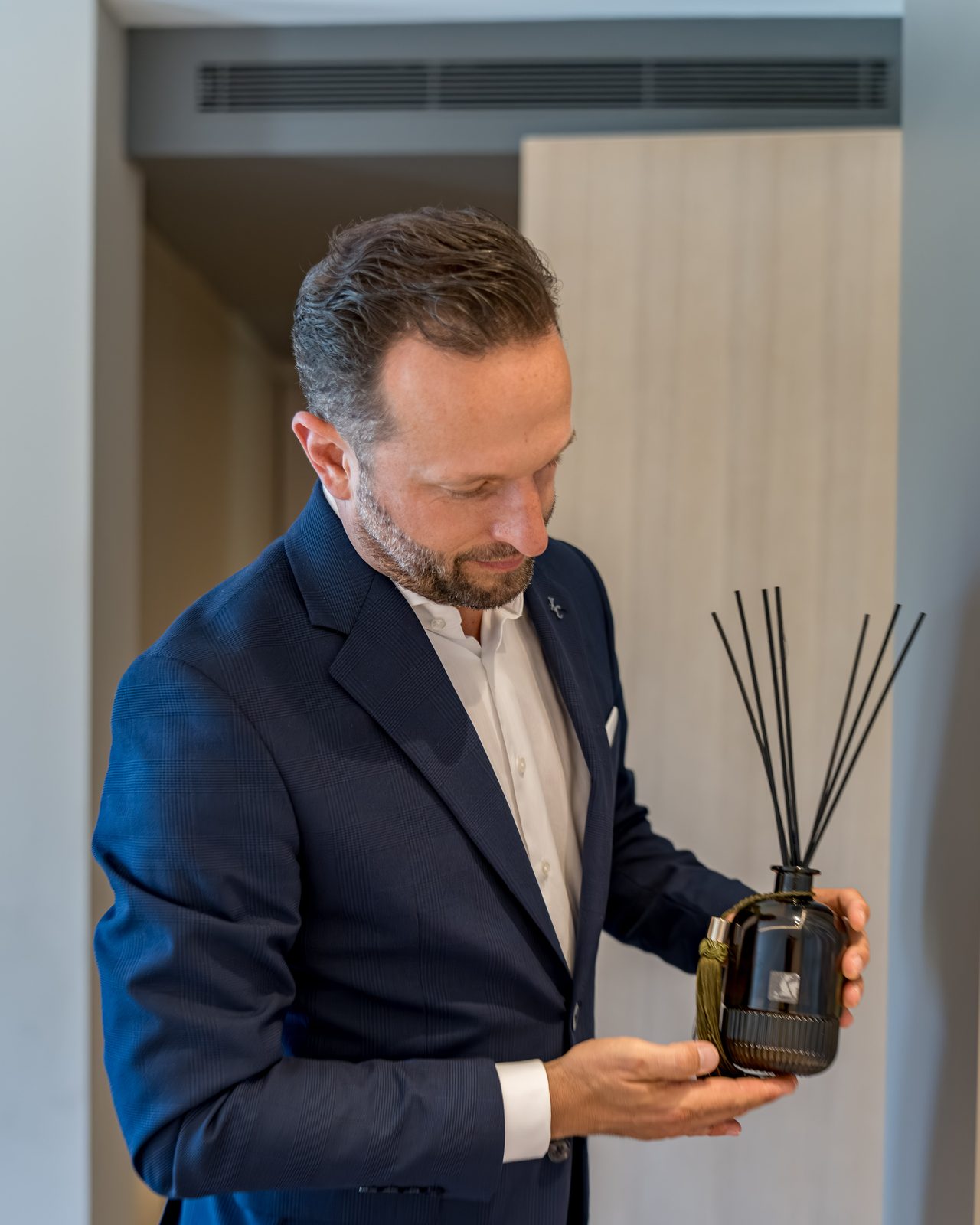
Daniel Rudolf, born in Worms in 1982, has spent more than twenty years tending to the daily — and often capricious — needs of the super-rich. A trained chef, he began his career in top restaurants before his flexibility and passion for service carried him into the world of billionaires, aristocracy and celebrities.
Newsletter
More notes from everyday service
New insights, about once a month, straight to your inbox. Unsubscribe at any time.
The newsletter launches shortly. Drop us a line and we'll add you for the start.